.jpg)
Note: Free tickets for the event must be claimed in advance.
One World's breakfast with the Sakharov Prize for Freedom of Thought.
This year too, the weekend festival will open with Eva Križková, the director of One World, her guests, and of course, with a delicious breakfast. Get the most recent news about festival events, meet and greet filmmakers from all around the globe, and be among the first to learn who earned the Sakharov Prize for Freedom of Thought this year. One World's breakfast is brought to you in cooperation with European Parliament.
24. 10. 2026 at 10.00 AM
Jeden svet Neighbourhood
Lector: Nawras Rashed | Age: Children, families and adults | Duration: 90–120 minutes
This workshop invites participants to imagine and physically build a peaceful neighbourhood together using recycled and everyday materials such as cardboard, paper, plastic bottles, boxes, fabric, sticks and other found objects.
Instead of creating individual artworks, participants will work together to build a shared neighbourhood. They can create houses, gardens, trees, a lake or river, shops, schools, playgrounds, community spaces, roads, bridges or anything else they believe a peaceful neighbourhood needs.
The workshop begins with a simple question:
“If we could build a neighbourhood where everyone feels safe, welcome, and connected, what would it look like?”
Participants will have to communicate, share ideas, make decisions, and collaborate with others. Each person can contribute something different, but all the individual creations will eventually become one shared neighbourhood.
The workshop is not about creating a perfect model. It is about the process of building something together, listening to each other, finding space for different ideas, cooperating, and imagining what a peaceful community could look like.
At the end, all the houses, gardens and shared spaces will come together to form one collective, peaceful neighbourhood, created entirely by the participants.
The workshop connects creativity, sustainability, cooperation, community, and peace, while giving participants a chance to physically experience the idea that a better community is something we can build together.
Materials: recycled cardboard, boxes, paper, plastic bottles, fabric, sticks, string, coloured paper, markers, paint, glue, scissors, and other found/recycled materials.
No previous artistic experience is required.
Note: Free tickets for the event must be claimed in advance.
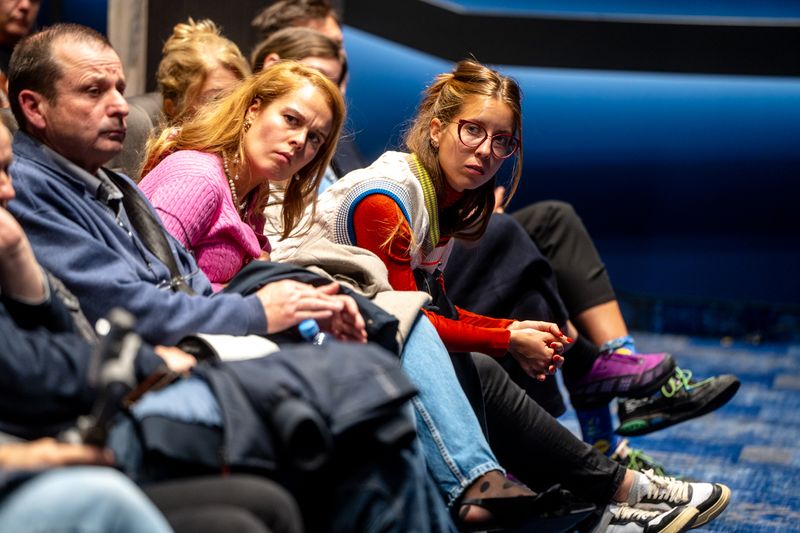
Colonialism is often associated with the empires of the British, French or Spaniards. But what happens when we look beyond overseas empires and examine colonialism as a broader system of power, domination and representation? Using historical and contemporary visual material, film and examples (not only) from Central and Eastern Europe, this discussion will explore who creates narratives, whose perspectives shape cultural memory and whose voices remain absent. The discussion will also consider how different societies understand imperial and colonial legacies, including the cases from our region, the Soviet Union, as well as contemporary Russia. Finally, the discussion will ask what it means to decolonise film, media, museums, and other cultural institutions, and whether changing the stories we tell is enough if the underlying power relations remain unchanged.
Guests of the discussion:
Yuliia Kovalenko - Ukrainian film expert and the director of the Docudays UA International Documentary Film Festival.
Eric Seleky - Head of Audience & Development at Movies that Matter, where he works on audience strategy, partnerships and communication. He also chairs the board of Stichting Literaire Activiteiten Amsterdam (SLAA).
Patrick Laviolette - social anthropologist and researcher at Masaryk University, and a member of the Czechs and the Colonial World research project exploring colonialism and representation in Czech art and visual culture.
Moderated by Dobrota Pucherová who is a literary scholar specialising in African and diasporic literature, postcolonialism and Central European literature.
The discussion will be held in English.
--
This event was co-funded by SlovakAid.
.png)
Funded by the European Union. Views and opinions expressed are however those of the author(s) only and do not necessarily reflect those of the European Union or The European Education and Culture Executive Agency (EACEA). Neither the European Union nor the EACEA can be held responsible for them.
This is a special screening also for parents with babies.
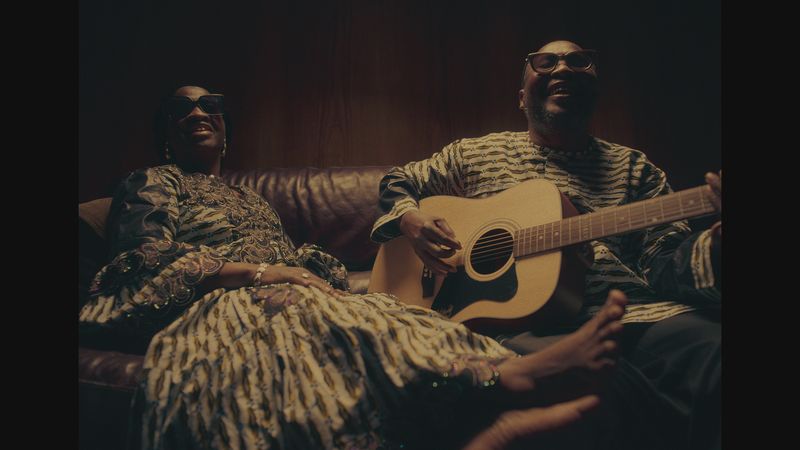
This documentary follows Amadou & Mariam, the blind musical duo from Mali whose legendary sound has captivated audiences worldwide, as they embark on an extraordinary journey to record a new album, reconnect with their roots, and redefine their iconic music. Traveling across Spain, France, and Mali, the duo draws inspiration from the landscapes, traditions, and rhythms that shaped their sound while embracing fresh influences that push their music in new directions. The film offers an intimate look at their creative process, capturing both the joy and challenges of crafting a new studio album. Through behind-the-scenes footage and personal interviews, viewers witness their warmth, humour, and resilience, gaining insight into two artists whose music transcends borders. Amadou & Mariamʼs journey is enriched by conversations with a stellar lineup of collaborators and admirers, including Damon Albarn, Chris Martin, Sofi Tukker, Mokobe, Matthieu Chedid, Tiken Jah Fakoly, and Vieux Farka Touré, who reflect on the duoʼs global impact and artistic influence. Visually striking and emotionally resonant, the documentary weaves together studio sessions, live performances, and intimate moments across three countries, offering a cinematic exploration of music, identity, and legacy. Ultimately, itʼs a celebration of creativity, cultural connection, and the transformative power of music through the eyes of two extraordinary artists. Today, it also stands as a tribute to Amadou Bagayoko, who sadly left this world on 4 April 2025.
---
This screening is part of the IncluCine 2 project, implemented within the Collaborate to Innovate scheme under the auspices of Europa Cinemas and funded by the Creative Europe – MEDIA programme.

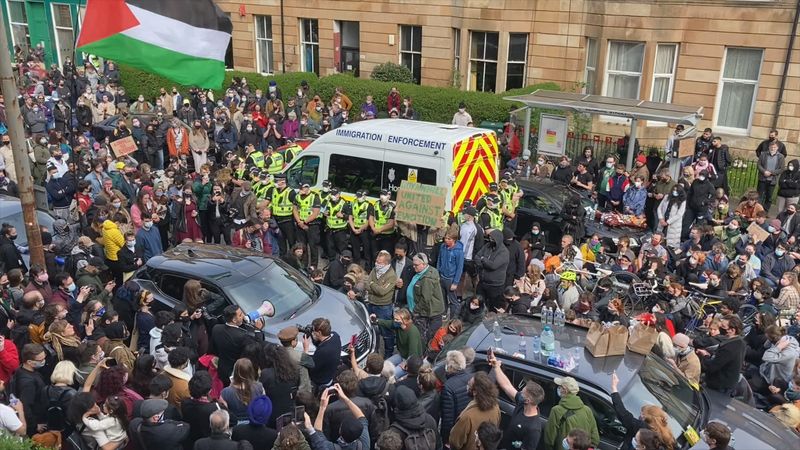
The film chronicles the true story of the May 2021 Kenmure Street Protest, when residents and campaigners rushed to block a UK Home Office deportation in progress in Glasgow’s most diverse neighbourhood. The eight-hour stand-off made international headlines as the community organised itself to buy time for more people to join their peaceful protest. Thanks to hours of footage from the day, the filmmakers recount the events of the day told from multiple perspectives. This film celebrates collective action, drawing on the stories that led to that day and the historic events that have shaped this community. An interesting addition to the film’s crew is Emma Thompson, who joined the creators as an Executive Producer. The film premiered at the 2026 Sundance Film Festival, where it won the Special Jury Award for Civil Resistance. The film Everybody to Kenmure Street won the Special Jury Award in the World Cinema – Documentary section at the Sundance Film Festival 2026 (Park City, Utah, USA).
.jpg)
Yanuni follows the extraordinary journey of Juma Xipaia, an Indigenous chief from the Brazilian Amazon, as she rises from a remote village in Xipaya territory to the political frontlines of climate justice. A fearless defender of her people and the rainforest, Juma has survived six assassination attempts while confronting illegal gold miners, land-grabbers, and multinational corporations threatening her ancestral land. Spanning years of activism and personal sacrifice, the film captures Juma’s historic appointment as Brazil’s first Secretary of Indigenous Rights under President Lula. At her side is Hugo Loss, her husband and the head of Special Operations at IBAMA, Brazil’s environmental protection agency. As Juma fights on the political front, Hugo leads dangerous operations to dismantle illegal mining camps deep in the Amazon — often under armed threat. When Juma discovers she is pregnant, her battle takes on new urgency. Navigating impending motherhood, rising political responsibility, and Hugo’s high-risk missions, she is forced to confront the personal cost of resistance. Told with intimate access and cinematic urgency, Yanuni is both a love story and a call to action. It illuminates one of the world’s most critical environmental and human rights struggles through a deeply personal lens. At once epic and intimate, Yanuni is a powerful portrait of resilience, Indigenous sovereignty, and the fight to protect the world’s largest rainforest — for future generations and the planet we call home.
Awards:
IDA Award – Honorable Mention 2025 in the Feature Documentaries Category – International Documentary Association
Best Documentary – Special Mention – Palm Springs International Film Festival 2026 (USA)
Come to the screening half an hour early (at 3.30 PM) and experience the exceptional performance Extinction by Divadlo bez domova (Theatre With No Home) outside the cinema entrance.
Discussion after the screening will explore what gives someone the strength to stand up against forces greater than the individual, and what sacrifices such resistance demands. We will follow up on the performance by Divadlo bez domova by exploring topics of home, sense of belonging, and the loss of one's place in the world. Are Juma and the Amazon truly as distant from us as it first appears, or are we also fighting for our forests and nature in Slovakia, only in a different way and on a different scale?
Guests:
Marek Kuchta, My sme les (We Are the Forest)
Patrik Krebs, Divadlo bez domova (Theatre With No Home)
Dorota Osvaldová, Znepokojené matky (Concerned Mothers) and Greenpeace Slovakia
Moderated by Lucia Szabová.
The discussion will be held in Slovak and will be interpreted into Slovak sign language.
---
Funded by the European Union.
.png)
The views and opinions expressed are those of the author(s) and do not necessarily reflect the views and opinions of the European Union or the European Agency for Education and Culture (EACEA). Neither the European Union nor the EACEA assumes any responsibility for them.
The event is also accessible with audio description and descriptive subtitles thanks to the IncluCine 2 project, which is being implemented as part of the Collaborate to Innovate initiative under the auspices of Europa Cinemas and is funded by the Creative Europe – MEDIA program.
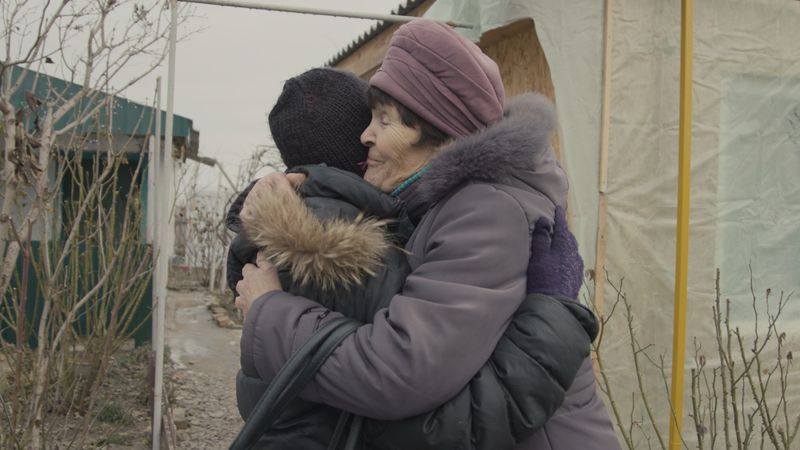
Six Ukrainian women – Iryna, Liudmyla, Halyna, Tetiana, Olha, and Mefodiivna – who experienced sexual violence and torture during Russiaʼs war of aggression in Ukraine from 2014 to 2023 refuse to remain silent. Each woman is a survivor who shares her story in this psychological portrait, creating a unique document of the crime committed, inspired by a desire to preserve the memory of truth and justice. The women are all members of SEMA Ukraine, the Ukrainian community of women survivors of sexual gender-based violence and conflict-related sexual violence.
Alisa Kovalenko and Marysia Nikitiuk accompany Iryna Dovhan, a survivor who has become an activist, as she documents the testimonies of other survivors in the liberated territories of Ukraine. Through her story, the film creates a portrait of collective trauma while also leaving space for hope. Iryna brings these women together, helping them to transform their pain into a shared fight – for truth, justice, and unity. Despite the immense suffering, the film becomes more than a record of war crimes; it transforms into a testament to resilience and women standing side by side.
Award:
Audience Award in the Panorama Section (Panorama Audience Award) – Berlinale 2026 (Germany)
The film screening will be followed by a discussion with director Alisa Kovalenko in English. Sára Činčurová will moderate the discussion.
---
Funded by the European Union.
The views and opinions expressed are those of the author(s) and do not necessarily reflect the views and opinions of the European Union or the European Agency for Education and Culture (EACEA). Neither the European Union nor the EACEA assumes any responsibility for them.
The event is also accessible with audio description and descriptive subtitles thanks to the IncluCine 2 project, which is being implemented as part of the Collaborate to Innovate initiative under the auspices of Europa Cinemas and is funded by the Creative Europe – MEDIA program. (plus the Collaborate to Innovate logo).
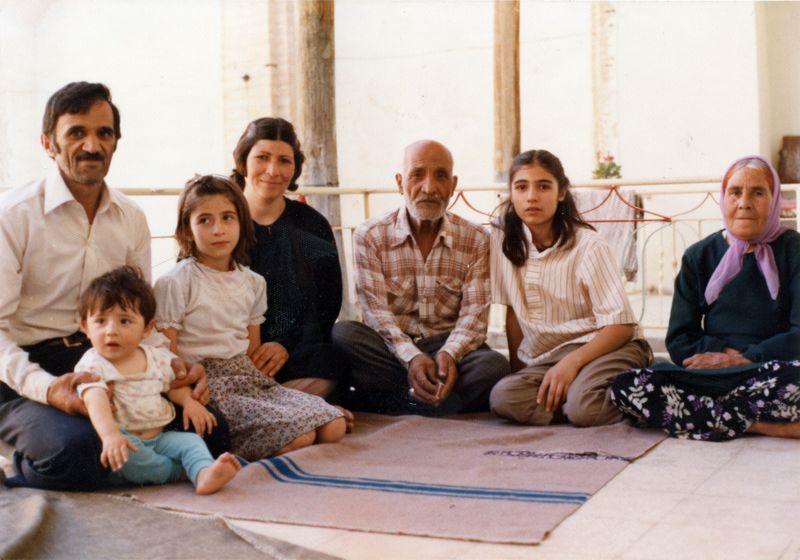
Pegah Ahangarani is an award-winning Iranian filmmaker and actress. She was born in Tehran in 1984 and has been living in exile in London since 2024. Her work has been featured in the prestigious magazine The New Yorker. “Rehearsals for a Revolution” is her first feature film. Through five portraits of family members and mentors – five different forms of resistance – the director traces the intimate story of her life and, at the same time, that of her country. Drawing on personal archives, home videos, footage of street protests, newspaper reports, and oral testimonies, she reconstructs more than four decades of Iranian history. From the early days of 1979 to the war that began in 2026, Ahangarani pieces together a memory that is both personal and collective, shaping a portrait of a country marked by political repression and by the enduring hope of a revolution that never quite arrives.