.jpg)
The official opening of the exhibition ‘The Sakharov Prize, the European Parliament and Human Rights’
The Sakharov Prize for Freedom of Thought is the highest tribute paid by the European Union to human rights work. It recognises individuals, groups, and organisations that have made an outstanding contribution to protecting freedom of thought. It promotes in particular freedom of expression, the rights of minorities, respect for international law, the development of democracy, and the implementation of the rule of law. First awarded in 1988 to Nelson Mandela and Anatoli Marchenko, the prize was presented the following year to Alexander Dubček. It is named in honour of the Russian physicist and dissident Andrei Dmitrievich Sakharov (1921–1989), who won the Nobel Peace Prize in 1975.
The exhibition is organised by the European Parliament Liaison Office in Slovakia, in cooperation with One World Film Festival.
21. 10. at 4.00 PM
Nová tržnica, Trnavské mýto, Bratislava
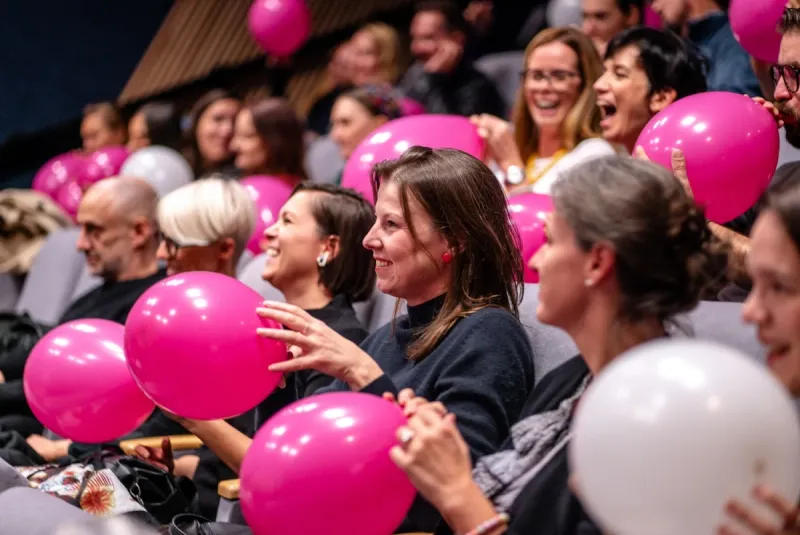
Note: Free tickets for the event must be claimed in advance.
The European Accessibility Act provides new momentum for more accessible audiovisual content. How is its implementation playing out in practice? What does it mean for the film industry, and what changes does it bring for audiences? Are the new rules already yielding concrete results? And where is their implementation stalling? The sixth annual Audiovisuals Without Barriers will explore these questions as part of another relevant, one-day international discussion.
Domestic and international experts will focus on the impact of the new legislation on the audiovisual sector and clearly identify the opportunities it opens up for the accessibility of film production, festivals, and distribution. We will examine the specific benefits and challenges of its implementation in Slovakia, as well as in the broader context of the European Union. What changes have already been achieved? Where do we encounter a lack of resources, experience, or cooperation? Why is it truly inadvisable to address accessibility merely as a formality, and what do we need to know today to avoid unnecessary missteps or mistakes that could ultimately prove costly?
We’ll move from questions to concrete solutions. People from the film industry, institutions, and the field of accessibility will pool their experiences to ensure that new requirements and European standards translate into real changes in Slovak movie theaters.
Join us and be part of it!
Moderator:
Emília Perez—accessibility expert, Culture Access Lab, Department of Translation Studies, Faculty of Arts, UKF in Nitra
Panelists:
Mariana Chytilová - Accessibility, Inclusion, and Diversity Consultant, Czech Republic
Gabriele Uzzo - Researcher and Accessibility Manager at SudTitles, Italy
Natália Centková – Project Manager for accessibility and inclusion at Kino Úsmev, Slovakia
The discussion will be simultaneously interpreted from and into Slovak Sign Language, as well as from Slovak into English.
The discussion will be followed by a closed-door roundtable where we will work together with representatives of communities disadvantaged in their access to culture to identify problems and seek solutions.
The panel discussion is co-organized by the Department of Translation Studies at the Faculty of Arts, UKF in Nitra, with support from the VEGA 2/0092/23 project, “Translation and the Act of Translating in the History and Present of the Slovak Cultural Space.”
---
This screening is part of the IncluCine 2 project, implemented within the Collaborate to Innovate scheme under the auspices of Europa Cinemas and funded by the Creative Europe – MEDIA programme.
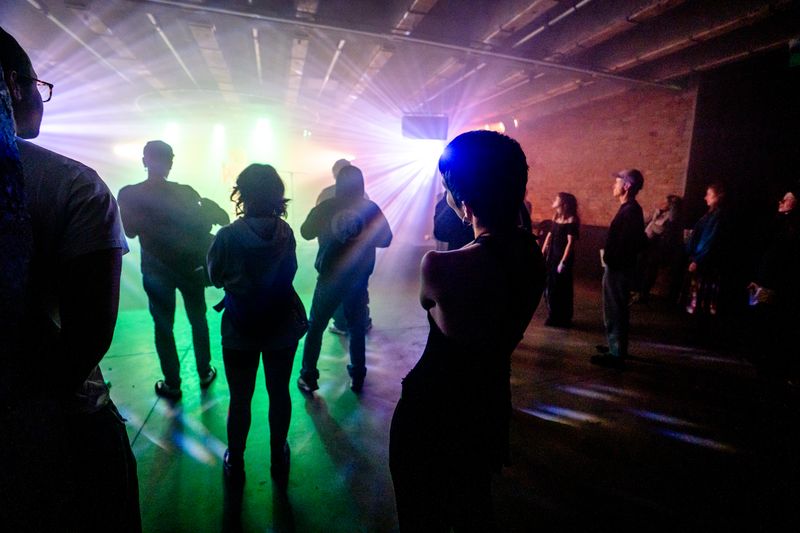
A documentary film by Viera Čákanyová, Lucia Kašová, and Barbora Sliepková "Wasteland Chronicles" takes us on a journey to the three biggest environmental burdens in Slovakia. Following its Slovak premiere at the One World Festival and the subsequent discussion, we are moving to Ost Block, where the dystopia continues.
Behind the mixing board will be Aid Kid, a Czech producer, musician and composer of the film’s score, who will guide us deeper into the toxic zone with his electronic music.
A night that toes the line between film dystopia and electronic underground awaits us.
Join the creative team, film enthusiasts and anyone not afraid to step into the wasteland.
22. 10. 2026 | Ost Block, Bratislava
Free entry. The zone is open to everyone.
Note: Free tickets for the screening must be claimed in advance.
Who should we help?
A child. A woman. A wounded soldier. A civilian on the other side of the front line. Or everyone equally? How do we choose?
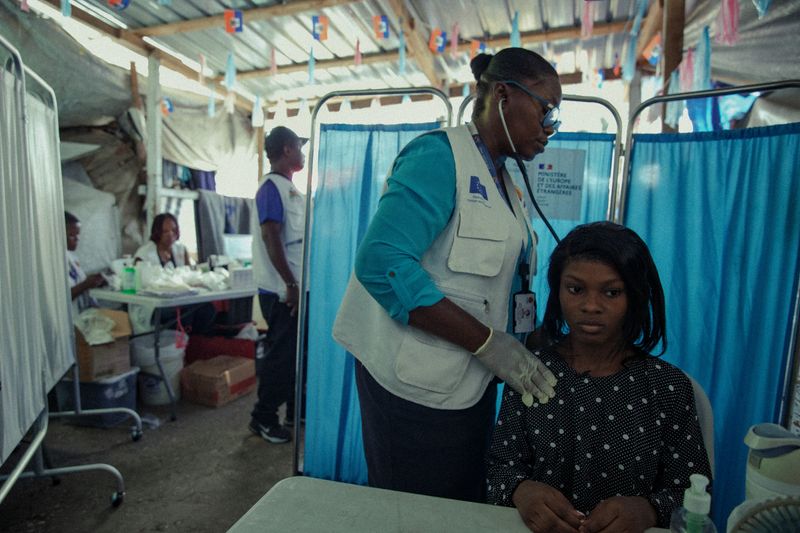
The short documentary film The Sound of Hope (17 min) takes us into the daily lives of three humanitarian aid workers supported by the EU in Syria, Haiti and a Congolese refugee settlement in Burundi. Through their stories and those of the people they help, the film shows what EU humanitarian aid looks like on the ground – how it saves lives, alleviates suffering and helps communities regain a sense of normalcy and hope.
Humanitarian aid is grounded in four fundamental principles: humanity, impartiality, neutrality, and independence. What do these principles mean when they meet the reality of war, natural disasters, or political pressure?
Following the Slovak premiere of The Sound of Hope, we will explore dilemmas in an interactive debate with humanitarian worker Marián Cehelník and Andrea Najvirtová, director of People in Peril. The discussion will cover topics such as: Is aid given to a soldier still humanitarian aid? Should we also help Russians if they need aid? Is it fair to speak about aid for “women and children” when men may receive less assistance? And can humanitarian organisations remain neutral in the face of suffering when it is clear who is causing it?
Together, we will explore the difficult choices humanitarian workers face in practice – and whether there are situations in which doing the right thing is far from straightforward.
This event is organised in the framework of the European Union’s Voices of Humanity, aimed at raising awareness of EU humanitarian aid and the principles that guide humanitarian action worldwide.
.jpg)
Note: Free tickets for the event must be claimed in advance.
One World's breakfast with the Sakharov Prize for Freedom of Thought.
This year too, the weekend festival will open with Eva Križková, the director of One World, her guests, and of course, with a delicious breakfast. Get the most recent news about festival events, meet and greet filmmakers from all around the globe, and be among the first to learn who earned the Sakharov Prize for Freedom of Thought this year. One World's breakfast is brought to you in cooperation with European Parliament.
24. 10. 2026 at 10.00 AM
One World neighbourhood
Right after breakfast (around 10:00 a.m.), we'll continue with the workshop.
Lector: Nawras Rashed | Age: Children, families and adults | Duration: 90–120 minutes
This workshop invites participants to imagine and physically build a peaceful neighbourhood together using recycled and everyday materials such as cardboard, paper, plastic bottles, boxes, fabric, sticks and other found objects.
Instead of creating individual artworks, participants will work together to build a shared neighbourhood. They can create houses, gardens, trees, a lake or river, shops, schools, playgrounds, community spaces, roads, bridges or anything else they believe a peaceful neighbourhood needs.
The workshop begins with a simple question:
“If we could build a neighbourhood where everyone feels safe, welcome, and connected, what would it look like?”
Participants will have to communicate, share ideas, make decisions, and collaborate with others. Each person can contribute something different, but all the individual creations will eventually become one shared neighbourhood.
The workshop is not about creating a perfect model. It is about the process of building something together, listening to each other, finding space for different ideas, cooperating, and imagining what a peaceful community could look like.
At the end, all the houses, gardens and shared spaces will come together to form one collective, peaceful neighbourhood, created entirely by the participants.
The workshop connects creativity, sustainability, cooperation, community, and peace, while giving participants a chance to physically experience the idea that a better community is something we can build together.
Materials: recycled cardboard, boxes, paper, plastic bottles, fabric, sticks, string, coloured paper, markers, paint, glue, scissors, and other found/recycled materials.
No previous artistic experience is required.
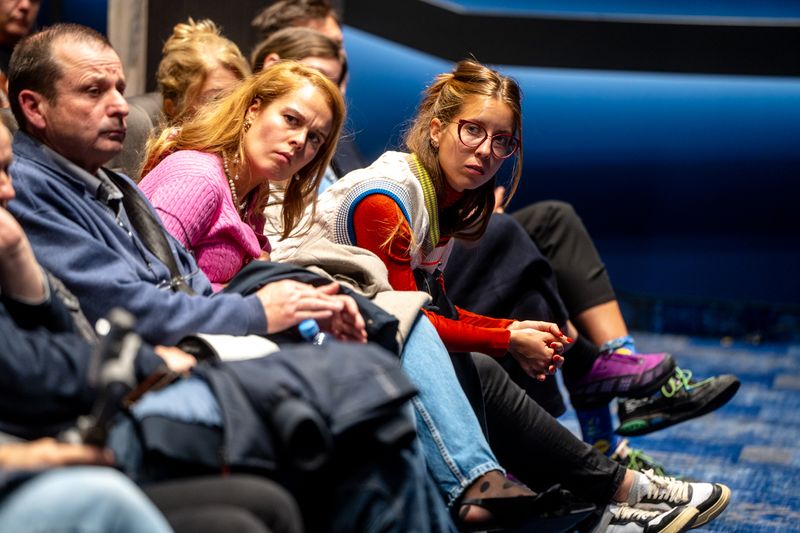
Note: Free tickets for the event must be claimed in advance.
Colonialism is often associated with the empires of the British, French or Spaniards. But what happens when we look beyond overseas empires and examine colonialism as a broader system of power, domination and representation? Using historical and contemporary visual material, film and examples (not only) from Central and Eastern Europe, this discussion will explore who creates narratives, whose perspectives shape cultural memory and whose voices remain absent. The discussion will also consider how different societies understand imperial and colonial legacies, including the cases from our region, the Soviet Union, as well as contemporary Russia. Finally, the discussion will ask what it means to decolonise film, media, museums, and other cultural institutions, and whether changing the stories we tell is enough if the underlying power relations remain unchanged.
Guests of the discussion:
Yuliia Kovalenko - Ukrainian film expert and the director of the Docudays UA International Documentary Film Festival.
Eric Seleky - Head of Audience & Development at Movies that Matter, where he initiated a programme on the Dutch colonial past. He also chairs the board of Stichting Literaire Activiteiten Amsterdam (SLAA).
Patrick Laviolette - social anthropologist and researcher at Masaryk University, and a member of the Czechs and the Colonial World research project exploring colonialism and representation in Czech art and visual culture.
Moderated by Dobrota Pucherová who is a literary scholar specialising in African and diasporic literature, postcolonialism and Central European literature.
The discussion will be held in English.
--
This event was co-funded by SlovakAid.
.png)
Funded by the European Union. Views and opinions expressed are however those of the author(s) only and do not necessarily reflect those of the European Union or The European Education and Culture Executive Agency (EACEA). Neither the European Union nor the EACEA can be held responsible for them.
We cordially invite you to the awards ceremony for the 27th annual One World International Documentary Film Festival and a screening of the winning film. Andrea Makýšová Volárová will host the evening.
The event will be held in Slovak and will be simultaneously interpreted into English.