.jpg)
In 2024, a new political power in Slovakia triggers radical shifts to bring independent public media under control. Amidst deep uncertainty and growing censorship concerns, a strike committee forms within the institution. The camera witnesses hallway micro-worlds and the resistance of journalists who, overnight, are forced to defend their profession. This Quixotic struggle against the machinery of power shows how ordinary people standing up for shared values maintain their own integrity.
---
This screening is part of the IncluCine 2 project, implemented within the Collaborate to Innovate scheme under the auspices of Europa Cinemas and funded by the Creative Europe – MEDIA programme.
.png)
Funded by the European Union. Views and opinions expressed are however those of the author(s) only and do not necessarily reflect those of the European Union or The European Education and Culture Executive Agency (EACEA). Neither the European Union nor the EACEA can be held responsible for them.
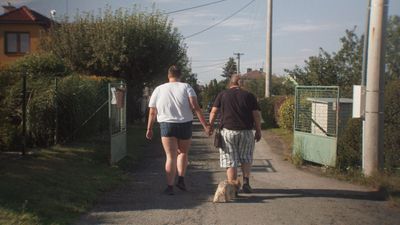
After the sudden death of his wife, Petr Jochec, the main protagonist of the film, must take on the care of his two adolescent children, Vanesa and Petr, who suffers from a severe autism spectrum disorder. The widowed father used to work away from home often, but now he must single-handedly look after his family and keep it together. Even though many fathers might abandon their families in such a situation, Mr. Jochec chooses to face the challenge head-on, enduring a daily struggle – from selflessly caring for both his children and ensuring the family’s financial stability to managing everyday household tasks. The film captures the Jochec family’s efforts to lead a normal life, explores the limits of love and parenthood, and depicts how each family member copes with their new and difficult circumstances. It also touches on often overlooked topics, such as the social support system and the lives of caregivers, while ultimately emphasizing the power of human bonds during life’s most challenging moments. “What About Petey?” is a realistic exploration of life on the edge of societal, physical, and emotional boundaries.
---
This screening is part of the IncluCine 2 project, implemented within the Collaborate to Innovate scheme under the auspices of Europa Cinemas and funded by the Creative Europe – MEDIA programme.

In 2024, a new political power in Slovakia triggers radical shifts to bring independent public media under control. Amidst deep uncertainty and growing censorship concerns, a strike committee forms within the institution. The camera witnesses hallway micro-worlds and the resistance of journalists who, overnight, are forced to defend their profession. This Quixotic struggle against the machinery of power shows how ordinary people standing up for shared values maintain their own integrity.
---
This screening is part of the IncluCine 2 project, implemented within the Collaborate to Innovate scheme under the auspices of Europa Cinemas and funded by the Creative Europe – MEDIA programme.
Funded by the European Union. Views and opinions expressed are however those of the author(s) only and do not necessarily reflect those of the European Union or The European Education and Culture Executive Agency (EACEA). Neither the European Union nor the EACEA can be held responsible for them.
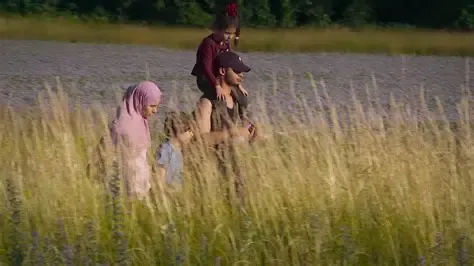
Amira arrived in Prague with her husband, six children, and memories of the life they left behind in war-torn Syria. Over the course of ten years, we follow the family as they face a challenge for which no one can prepare: her children are growing up between two worlds. As they mature, they speak better Czech than Arabic and find themselves caught between their parents' expectations and their own emerging identities. Their adaptation fills Amira with pride, but also brings doubts. She searches for a real home for her children while trying to figure out how not to lose herself in a foreign country.
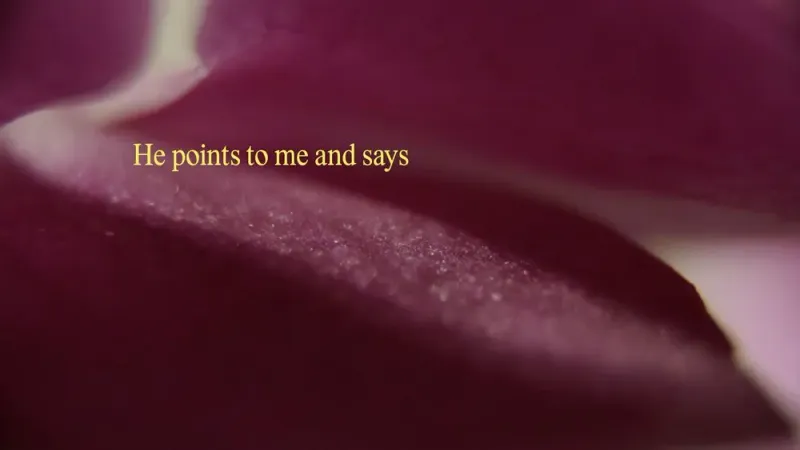
Inside is a short film offering a glimpse into the lives of women who have experienced abortion. Fragments of their testimonies are transformed into a poem that conveys their thoughts, emotions, and fears. Flowers are used to symbolize both women and reproductive organs as such. Abstract visual sequences, combined with archival footage and the poem, reveal the women’s inner world, while the soundscape represents the outside world and the societal pressures these women have to face. The film aims to create a safe space for contemplation as well as empathy.
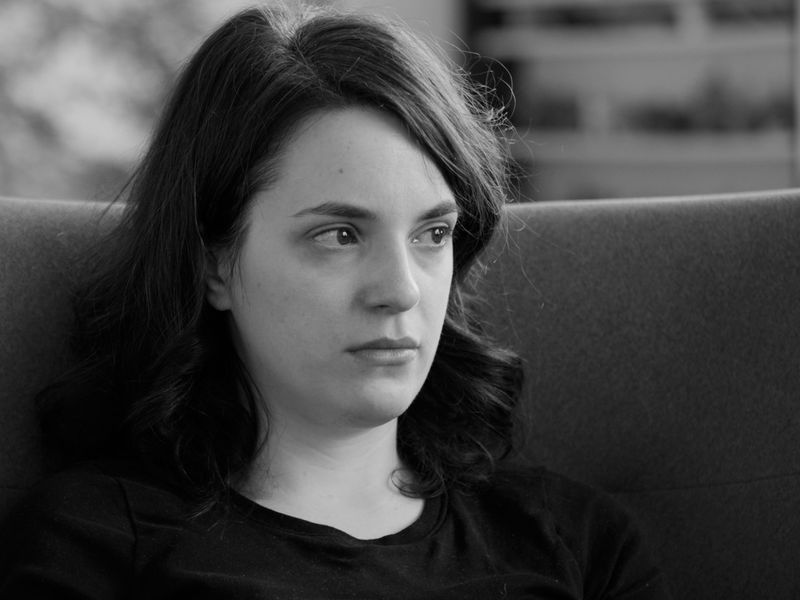
Katka was thirteen. Roman was forty. The summer camp Chachaland, once a place of joy for children, became a place of abuse. What followed were years of therapy, depression, and PTSD. As an adult, Katka found the strength to write a blog and take her abuser to court.The film is an intimate testimony to how abuse continues to shape a life long after it ends – and how the courage to speak out can be both deeply painful and profoundly healing.
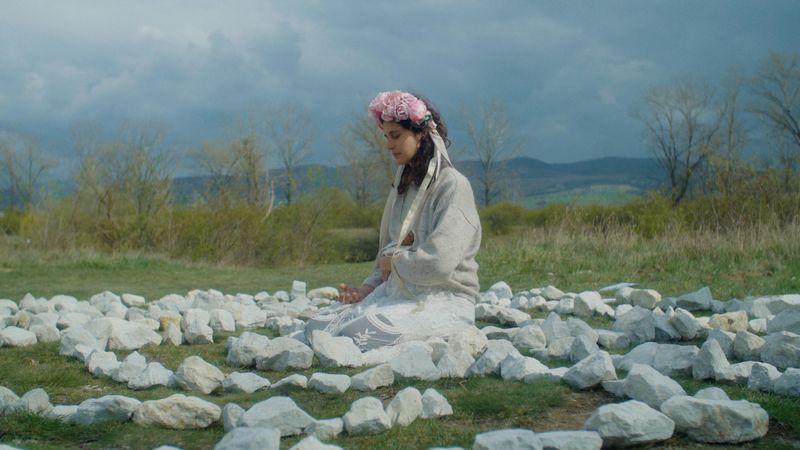
“Becoming Ema” follows a young woman who, wanting to “become someone”, defies her parentsʼ expectations and societal norms. Ema and her husband, Tomáš, decide to step out of the hamster wheel of modern life, investing their savings in a rural plot of land to embrace a life close to nature and to fully experience the transformative power of motherhood. Emaʼs choice to prioritize family over financial security and a career creates a deep rift between her and her parents, who struggle to accept her decisions. As Ema and Tomáš navigate financial hardships and unresolved generational trauma, Ema turns to therapy and deep self-reflection. In the process, she discovers that the validation she seeks from her parents must come from within herself. “Becoming Ema” is an exploration of belonging and self-acceptance, and of motherhood and all its nuances.
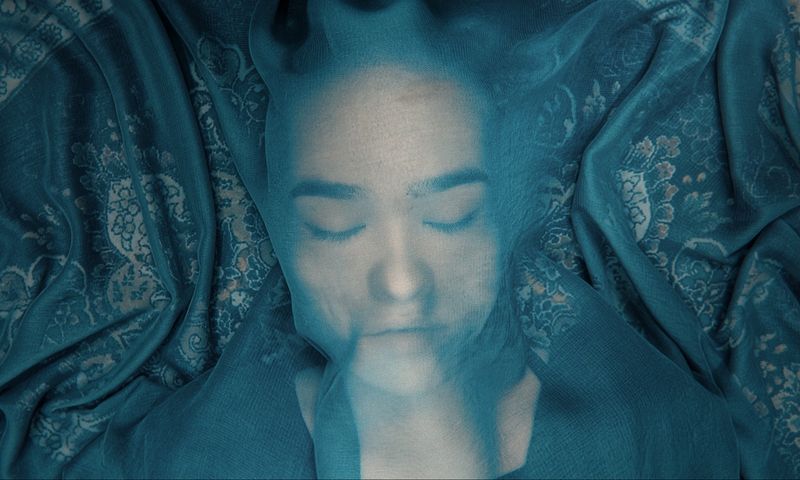
At just sixteen, Soraya is already creating stunning drawings and sculptures that are as beautiful as they are dark. This strong-willed Afghan sculptor and illustrator has been trying for five years to escape Iran and join her mother in Austria. This subtly textured self-portrait interweaves chilling scenes of her escape attempts with political news from Afghanistan and videos in which she sings and dances – or shows her bruises. Soraya is married to a violent man, and she is determined to shape her own future. Mehrdad Oskouei directed this film entirely remotely, with Soraya filming all the footage herself over five years using her phone. This material is interspersed with shots of her drawings and surreal animations. Making art is no idle pastime for Soraya. She puts all her worries, joys, and fears into her drawings and the sculptures she makes from soaked egg cartons or clay that she finds along her escape routes. Many of her drawings feature recurring figures: a loyal fox who is her traveling companion, a pink moon that always watches over her, and a clown who ever laughs – a character Soraya identifies with.
Awards:
IDFA Award for Best Feature-Length Documentary – International Documentary Film Festival Amsterdam 2025 (Netherlands)
Big Stamp in the International Competition – Zagrebdox 2026 (Croatia)
Jury Award a Audience Award for Best International Documentary – Docville 2026, Leuven (Belgium)
Stefan Jarl International Documentary Award for Best International Documentary – Tempo Documentary Festival 2026, Stockholm (Sweden)
This screening is part of the IncluCine 2 project, implemented within the Collaborate to Innovate scheme under the auspices of Europa Cinemas and funded by the Creative Europe – MEDIA programme.
Post-film discussion:
Director Mehrdad Oskouei, together with Soraya Akhlaghi – the co-director and protagonist – will discuss the making of the film after the screening. They will talk about how their remote collaboration unfolded over the five years of filming, what it took to achieve freedom in both practical and personal terms, and how the raw footage shot on a mobile phone gradually became a finished film. Audiences will therefore have the unique opportunity to hear from someone who lived through this story, as well as from the director who helped bring it to the big screen, and to ask questions about a project that has been in the making for years.
The discussion will be held in English and Persian and moderated by Slovak-Iranian stand-up comedian and activist Nasi (Nastaran Motlagh).
---
This screening is part of the IncluCine 2 project, implemented within the Collaborate to Innovate scheme under the auspices of Europa Cinemas and funded by the Creative Europe – MEDIA programme.
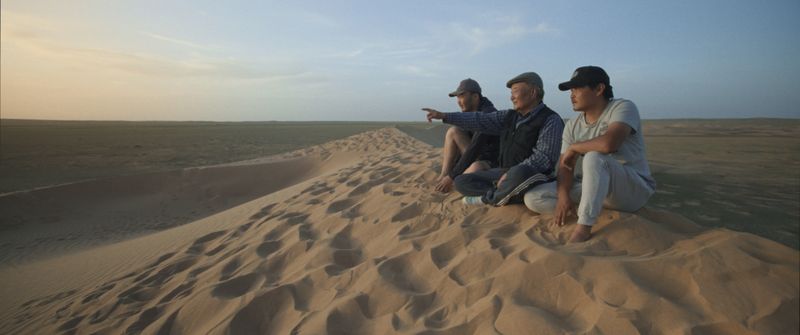
“We Have to Survive” is a cinematic odyssey across our shared home – Earth – capturing the extraordinary ways people adapt, endure, and find hope in a changing world. Journeying across four continents, the film invites us into different “rooms” of our global home: the fragile Outer Banks of the USA, where the ocean slowly reclaims the land; the vast Mongolian desert, where a family plants trees against the wind; the underground town of Coober Pedy in Australia, where people build their lives beneath the scorching surface of the earth; and the icy shores of Greenland, where ancient fishing traditions melt into new beginnings. Through intimate, character-driven stories, “We Have to Survive” reveals not only the challenges of a changing world but also the unbreakable spirit of those who call it home. Every scene is a window into human resilience – a reminder that despite distance and difference, we share the same roots, the same sky, the same fragile planet. This is not a film about despair, but about courage. It’s a call to remember that our greatest power lies in caring – for one another and for the only home we have.
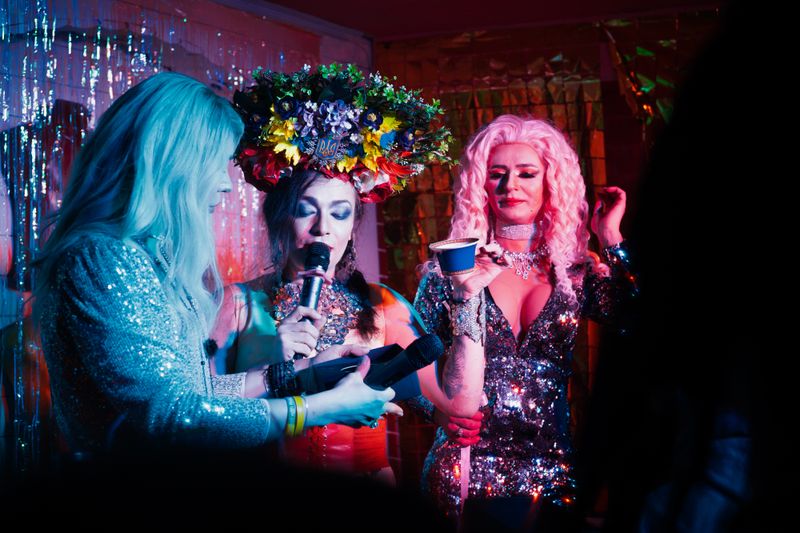
Three Ukrainian drag queens – Marlene, Monroe, and Aura – choose to remain in their war-torn country, fighting for LGBTQ+ inclusion amid Russiaʼs invasion. Spanning from the 2014 Maidan Revolution to spring 2024, their story blends the glamour of drag with the brutality of war. Marlene, a beloved drag icon, hides a vulnerable side as Alexander, grappling with trauma and family obligations. Monroe, a popular influencer, navigates her evolving gender identity while advocating for LGBTQ+ rights. Aura, determined to fight for inclusion in both the military and society, balances the chaos of war with her love for drag. A charity drag show becomes a powerful moment of unity and resilience. The protagonists’ complex personalities are revealed gradually along with their doubts and struggles. Yet these do not stand in the way of celebrating life. On the contrary, it is in difficult moments that the strength and courage of those who choose to face adversity shine through. The film is a story of self-discovery, love, hope, and the power to find joy even in the darkest of times. The film Queens of Joy was nominated for the Golden Alexander in the Newcomers Competition section at the Thessaloniki Documentary Film Festival 2025 (Greece).
---
.png)
Funded by the European Union. Views and opinions expressed are however those of the author(s) only and do not necessarily reflect those of the European Union or The European Education and Culture Executive Agency (EACEA). Neither the European Union nor the EACEA can be held responsible for them.
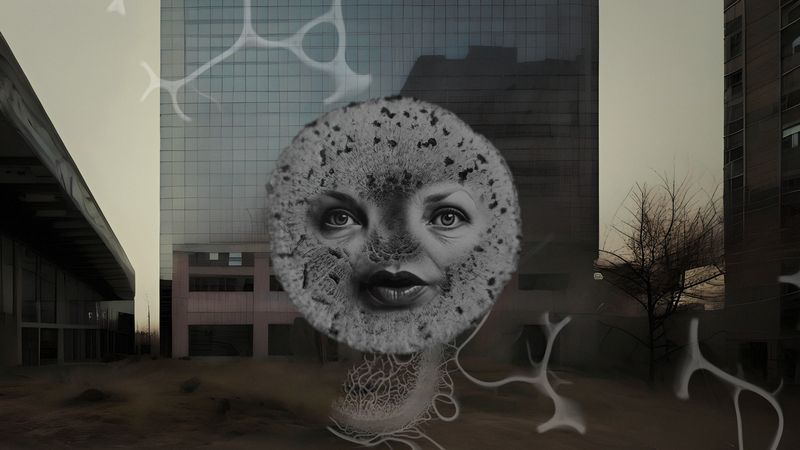
Slovakia has 1,200 environmental burdens, including 260 in an alarming state. The contaminated landscapes become symbols of our relationship with the Earth and a testament to humankind’s destructive nature. Three women directors explore three of the country’s most dangerous toxic waste sites, offering a cinematic therapy for climate anxiety.
---
Funded by the European Union. Views and opinions expressed are however those of the author(s) only and do not necessarily reflect those of the European Union or The European Education and Culture Executive Agency (EACEA). Neither the European Union nor the EACEA can be held responsible for them.
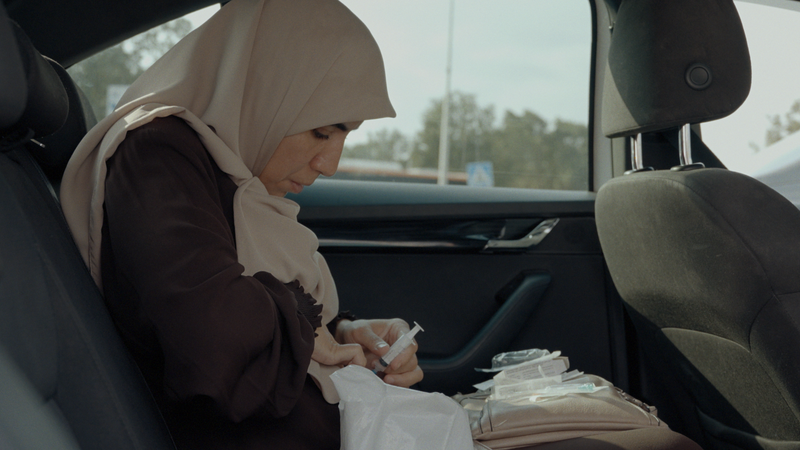
For more than twenty years, Hind has lived a marriage shaped by absence. Her spouse is serving a life sentence in an Israeli prison, one of thousands of Palestinian men incarcerated far from their families. Visits are rare, physical contact is forbidden, and intimacy is impossible. Yet Hind still dreams of becoming a mother. Through an extraordinary underground network, Palestinian prisoners have found a way to smuggle their sperm out of prison, allowing their wives to conceive through IVF. The film follows Hind through the intimate stages of this journey: secret phone calls, medical appointments, moments of hope, and devastating uncertainty. Interwoven with Hindʼs story are the voices of other women, doctors, and former prisoners who reveal the human cost of incarceration beyond prison walls. The film moves between domestic spaces and heavily restricted institutions, showing how love, desire, and parenthood persist even under extreme control. Told entirely through real-time observation, the film reframes motherhood not as a private desire, but as a space shaped by power, control, and enforced absence. It offers an intimate, restrained portrait of women whose bodies become quiet sites of resistance, and of lives suspended between waiting, hope, and the cost of endurance. The film For Life had its world premiere at the Visions du Réel 2026 International Film Festival in Nyon (Switzerland).
After-film discussion:
When war and occupation become part of everyday reality, the meaning of ordinary life changes too. Seeing loved ones seems impossible, safety and security become a rarity, and bringing a child into the world turns into an act of resistance. In the post-screening discussion, the guests – Salma Al Henami, who is of Slovak-Yemeni origin, Lebanese-born Rami Jacob, and Julián Vrábel, who spent two months in the West Bank – will explore what family means when it is shaped not only by love, but also by perseverance and the struggle for survival.
---
This screening is part of the IncluCine 2 project, implemented within the Collaborate to Innovate scheme under the auspices of Europa Cinemas and funded by the Creative Europe – MEDIA programme.
Funded by the European Union. Views and opinions expressed are however those of the author(s) only and do not necessarily reflect those of the European Union or The European Education and Culture Executive Agency (EACEA). Neither the European Union nor the EACEA can be held responsible for them.
A documentary film by Viera Čákanyová, Lucia Kašová, and Barbora Sliepková "Wasteland Chronicles" takes us on a journey to the three biggest environmental burdens in Slovakia. Following its Slovak premiere at the One World Festival and the subsequent discussion, we are moving to Ost Block, where the dystopia continues.
Behind the mixing board will be Aid Kid, a Czech producer, musician and composer of the film’s score, who will guide us deeper into the toxic zone with his electronic music.
A night that toes the line between film dystopia and electronic underground awaits us.
Join the creative team, film enthusiasts and anyone not afraid to step into the wasteland.
22. 10. 2026 | Ost Block, Bratislava
Free entry. The zone is open to everyone.
Note: Free tickets for the screening must be claimed in advance.
Who should we help?
A child. A woman. A wounded soldier. A civilian on the other side of the front line. Or everyone equally? How do we choose?
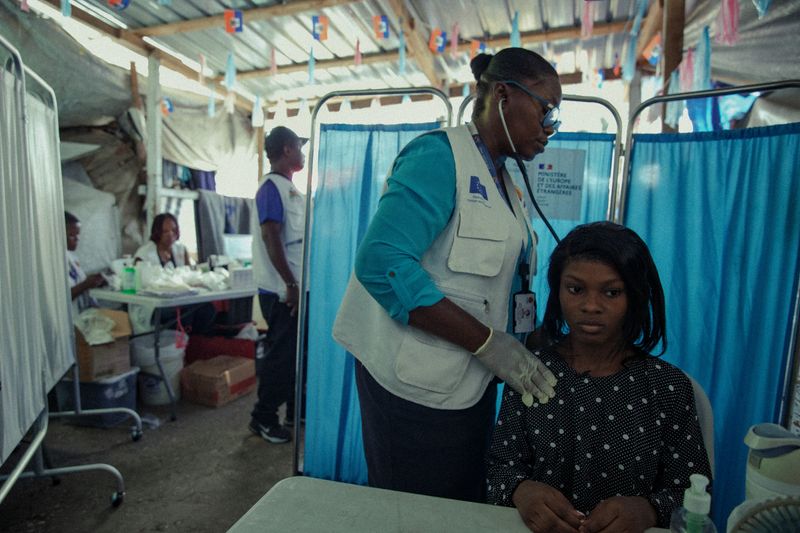
The short documentary film The Sound of Hope (17 min) takes us into the daily lives of three humanitarian aid workers supported by the EU in Syria, Haiti and a Congolese refugee settlement in Burundi. Through their stories and those of the people they help, the film shows what EU humanitarian aid looks like on the ground – how it saves lives, alleviates suffering and helps communities regain a sense of normalcy and hope.
Humanitarian aid is grounded in four fundamental principles: humanity, impartiality, neutrality, and independence. What do these principles mean when they meet the reality of war, natural disasters, or political pressure?
Following the Slovak premiere of The Sound of Hope, we will explore dilemmas in an interactive debate with humanitarian worker Marián Cehelník and Andrea Najvirtová, director of People in Peril. The discussion will cover topics such as: Is aid given to a soldier still humanitarian aid? Should we also help Russians if they need aid? Is it fair to speak about aid for “women and children” when men may receive less assistance? And can humanitarian organisations remain neutral in the face of suffering when it is clear who is causing it?
Together, we will explore the difficult choices humanitarian workers face in practice – and whether there are situations in which doing the right thing is far from straightforward.
This event is organised in the framework of the European Union’s Voices of Humanity, aimed at raising awareness of EU humanitarian aid and the principles that guide humanitarian action worldwide.
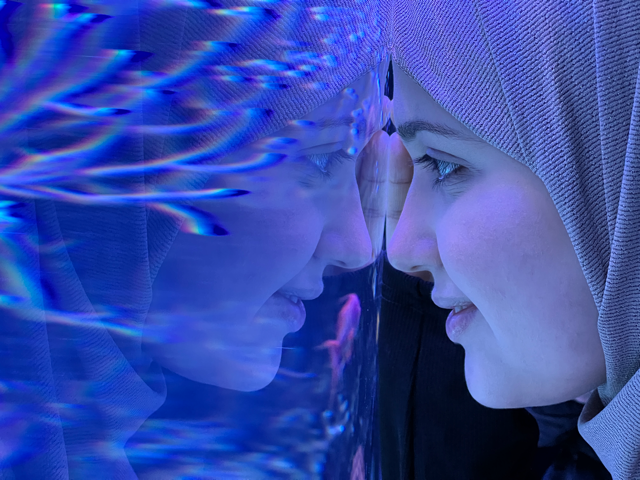
One in a Million shares the story of eleven-year-old Israa as she and her family leave Syria in search of safety and a better life in Europe. Filmed over a decade, directors Itab Azzam and Jack MacInnes capture Israa as she embarks on an epic journey – from fleeing the war as a young Syrian refugee, to navigating adolescence and a new culture in Germany, to returning to her home of Aleppo as an adult. One in a Million is an intimate, coming-of-age story that asks a universal question: What does it mean to call a place home? The film illuminates the complexities of the refugee experience, capturing Israa and her family as they confront war, exile, and heartbreak – and discover resilience, freedom, and love – in a foreign land. The film One in a Million won the Directing Award and the Audience Award in the section World Cinema – Documentary at the Sundance Film Festival 2026 (Park City, Utah, USA).
Post-film discussion:
In the post-screening discussion, we will explore integration from three different perspectives: UNHCR will provide figures and a broader context – how many people decided to return home after the change of regime in Syria and how many continue to live in exile. We will learn about the experience of integration in practice from the civil association Mareena, as well as hear a personal story of fleeing Syria told by someone who experienced it firsthand – what does integration into a different cultural context really mean. Where is the line between adapting and forgetting who you once were?
Guests:
Miya Hashimoto, UNHCR
Petra Kováč, Mareena
Ismail Samar, member of the Mareena community from Syria
The discussion, which will be held in Slovak, will be moderated by Frederika Hazéová.
---
This screening is part of the IncluCine 2 project, implemented within the Collaborate to Innovate scheme under the auspices of Europa Cinemas and funded by the Creative Europe – MEDIA programme.
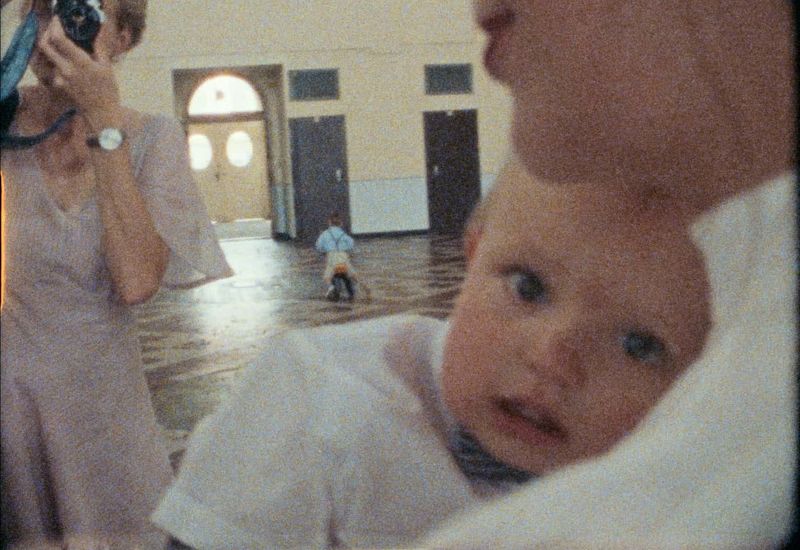
An intimate self-portrait of a filmmaker who documents his years-long struggle to start a family. We follow the story through the lens of Michal, both the protagonist and director. The film begins with his breakup with his girlfriend and separation from her son Mikoláš, whom he had come to see almost as his own. After public protests and a global pandemic, Michal begins dating Saša, a much younger woman. Their relationship is affected by his motherʼs serious illness and shaped by Michal’s connection to his late father. Will he succeed in starting a new family with Saša, who feels too young for parenthood? Unborn Father explores how the desire for parenthood, traditionally associated with women, affects a young man. It raises the question: What does it take to become a true father in todayʼs world?